‘the robots have arrived’
The Orioles are going to win the American League East and Pete Alonso, late of the New York Mets, is going to hit 83 home runs.
This is the only rational conclusion after listening to Baltimore defeat the Yankees 2-0 in the first game of 2026 spring training on February 20.
Making insane early projections is one of the great joys of baseball. A beautiful example came from the whimsical Mariners booth later on Friday.
“Holy smokes! Dom Canzone with the catch of the spring and it comes in the first inning of the first game of the Cactus League season,” enthused Rick Rissz.
There was some disappointment on the Orioles broadcast when Alonso grounded out to first in his debut at-bat for the O’s, but that was all forgotten when the star out of Tampa and the University of Florida hit a 2-run home run in the sixth inning, flying to left. That was the difference, the only scoring. And that’s enough for me to crown the Orioles AL East champs*.
Brett Hollander and Josh Lewin called the Orioles game on WBAL from Ed Smith Stadium in Sarasota. It was a delight to listen to them, a new team pairing behind the mics this year on the 24-station Orioles Radio Network.
“Baseball on the radio is back. Can’t beat it,” Hollander said in the opening inning, helpfully delivering the mission statement of this current endeavor.
“It’s tough not to be a little romantic today,” Lewin said.
Today is the first time I have heard either of these men. Hollander is set to be the lead play-by-play guy, except for when he is not. A release from the Mid Atlantic Sports Network unhelpfully lists three men, Hollander and Lewin along with Ben Wagner, as “lead play-by-play radio announcer.”
For the inaugural radio broadcast I tuned in for much air time was spent on the new ABS — Automatic Ball-Strike system.
“The robots have arrived,” Lewin said** when the first challenge under this new twist of spring training was invoked in the second inning.
Colton Cowser, the Orioles centerfielder, challenged a called strike in the second inning. He lost the challenge, as home plate umpire Chad Fairchild’s call was confirmed.
“Somewhere Earl Weaver is yelling, ‘C’mon! What are we doing?’” Lewin said, declaring the end of managerial disputes.
“I’m from Baltimore, I argue,” Hollander offered his sociological verdict of Charm City’s population.
Before the Orioles were the Orioles…
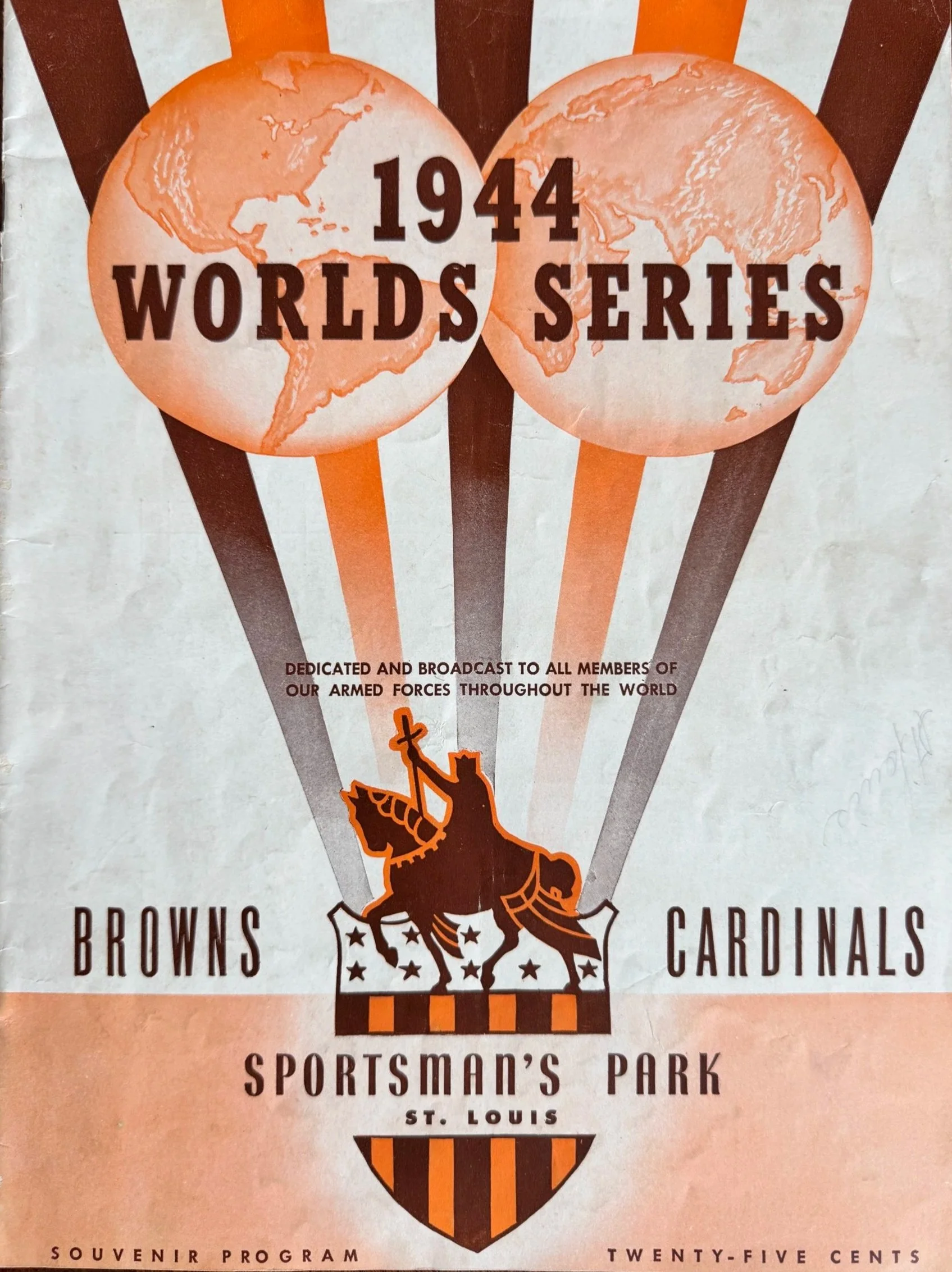
The Orioles have existed for 132 years, but they only moved to Baltimore in 1954. Before that, they were in St. Louis as the sad-sack Browns, a doormat of the junior circuit. But in 1944, the Browns made it to the World Series and lost to the Cardinals. The two teams shared a city and a stadium, but only one was world champion.
The broadcast burned through a lot of airtime discussing the details of the new ABS system and strategy for teams to deploy the challenges — each team gets to lose two challenges during the first nine innings; only batters, catchers, and pitchers can make the immediate request for a review. This was similarly featured on the Royals broadcast of their game against the Rangers for KFNZ from Surprise, Arizona, and the Mariners game call against the Padres in Peoria, Arizona,*** on KIRO.
Little was definitive, save for the near universal declaration that pitchers, deemed much too convinced that every ball thrown by them is a strike, could not be trusted with the power to challenge. Yankees catcher Austin Wells made two quick challenges, both overturned, and the Yanks were shut out of further calls to electronic judgment by the fifth inning.
I suspect these discussions in broadcasts will not diminish. I hope they become more sophisticated and broadcasters gain insight from managers and players. The idea of challenging a call has got to be made in the context of the game situation. It makes no sense to challenge in a low-leverage moment.
Maybe “Moneyball” taught us something. The lesson of this seminal book by Michael Lewis about Billy Beane’s roster building of the Oakland A’s is often missed. Billy Beane looked for market inefficiencies. In the book, baseball teams were not pricing the value of walks efficiently and Beane took advantage of his insight. The lesson is not about walks. It’s about undervalued assets. Nobody undervalues walks any longer, so today’s version of Billy Beane has to work extra hard to find inefficiencies — somewhere to zig because the rest of the league is zagging. Maybe that will be how to use challenges to best advantage. Be bold enough to recognize with the game is being decided in the fourth inning and challenge then. Wait for, and identify accurately, the inflection point of each game and be ready to make the right decision if it presents itself.
Baseball games are often decided by key individual moments, hinge plays that can be seen clearly in hindsight. Single pitch executions. Hitters taking full advantage of mistake pitches. Clutch defensive plays. They are not always in the bottom of the ninth with Eckersley on the mound and a hobbled Gibson at the plate. In fact, that are not usually in those moments. Teams will scramble to figure out how to identify, in the midst of an ongoing game, when the most valuable time is to deploy a challenge. Some teams will prove to be better than others and it will make a difference in their performance.
This is the narrative. This is one story, of many, worth following.
“On opening Day in Sarasota, the Orioles shut out the Yankees,” Hollander said with the final out.
And inside, every Oriole fan thought they are never going to lose all year.
We shall see.
*Where is that sarcasm font when you need it?
**This is the first time I have ever listened to an Orioles radio broadcast and the first time I have ever heard Mr. Hollander and Mr. Lewin. I did my best to identify who was speaking, but some quotes may be misattributed.
***The Royals spring training broadcast does, literally, play in Peoria … Arizona.