NIX the JINX
I took in Saturday’s Rays-Cardinals game on MLB.TV and synced up the Rays radio call with Andy Freed and Neil Solondz on WDAE from Tampa.
Michael McGreevy was dealing. Freed and Solondz noted he was befuddling the Rays and, in fact, had a perfect game through three innings, a valuable bit of information succinctly described:
“Feduccia swings and misses. McGreevy strikes out his fourth and has faced the minimum through three innings of no-hit ball. Nine up and nine down.”
The Rays booth team had no problem with accuracy and full disclosure.
The Cardinals announcers, on the other hand, were upholding a stupid tradition.
When play-by-play guys do verbal gymnastics to avoid mention of a no-hitter it chaps my ass. It is contrary to the prime directive. Baseball on the radio requires the broadcasters to tell me what’s going on.
No less an authority than Joe Buck provides the reasoning in his autobiography, “Lucky Bastard.”
“On the radio, there is no ground ball to second base until the radio announcer says, ‘Ground ball to second base.’”
John Rooney and Ricky Horton on KMOX Saturday were, as is their habit, old school. They left unmentioned the number of hits the Rays had on the day and pointedly did not point out the no-hitter the Cardinals pitcher had in the works.
Red Barber, the iconic and beloved Dodgers announcer and latter-day avuncular NPR star (and Tallahassee resident), put the lie to the superstition in the World Series between Brooklyn and the Yankees.
For the 1947 World Series Red Barber and Yankees broadcaster Mel Allen split calling the games on the radio. When Barber took his turn at the mic in the last half of Game Four, Yankees Bill Bevens had a no-hitter going. The game was described in “Red Barber: The Life and Legacy of a Broadcasting Legend” by Judith R. Hiltner and James R. Walker
“Following the popular tradition of not revealing that a no-hitter was in progress from the fifth inning onward, Allen did not tell his listeners that Bevens had not yet allowed a hit,” Hiltner and Walker write. “Barber, who by this point in his career ridiculed the taboo as the ‘fifth inning no-hit hoodoo,’ made Bevens’s progress toward a ‘no-no’ the story of the game.”
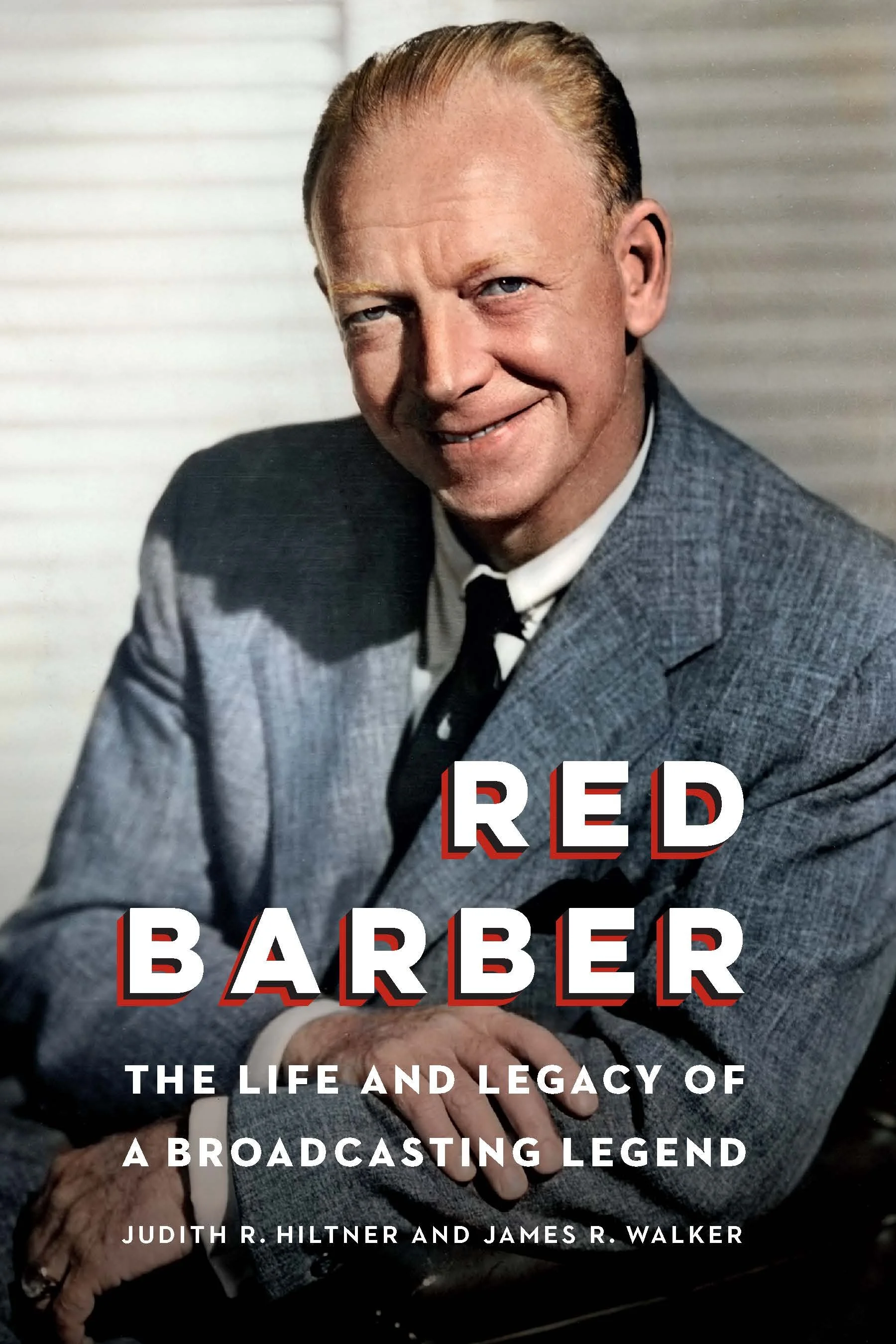
Red Barber
Walter Lanier “Red” Barber
Barber himself wrote in his book, “1947: When All Hell Broke Loose,” “What maturity as a broadcaster I achieved came in 1947 over the long season when I was the announcer for the first black man in the big leagues. It was completed in the last half of the fourth game of the World Series. I remained a reporter, not a dealer in superstition.”
Barber said Yankees fans called newspapers and radio stations complaining about him putting the jinx on Bevens. But not Yankees manager Bucky Harris.
“If you can control what the ball does by what you say about it, I’ll pay you a lot more money than radio does to sit by me on the bench,” Harris told Barber.
Bevens himself told the broadcaster his failure was not due to a hex.
“Red, you had nothing to do with it. ... It was those bases on balls that did it.”
McGreevy’s no-no and the tiptoeing around was not the only interesting thing about the game.
I checked the to make sure Whitey Herzog had not come back from the grave and replaced Oli Marmol.
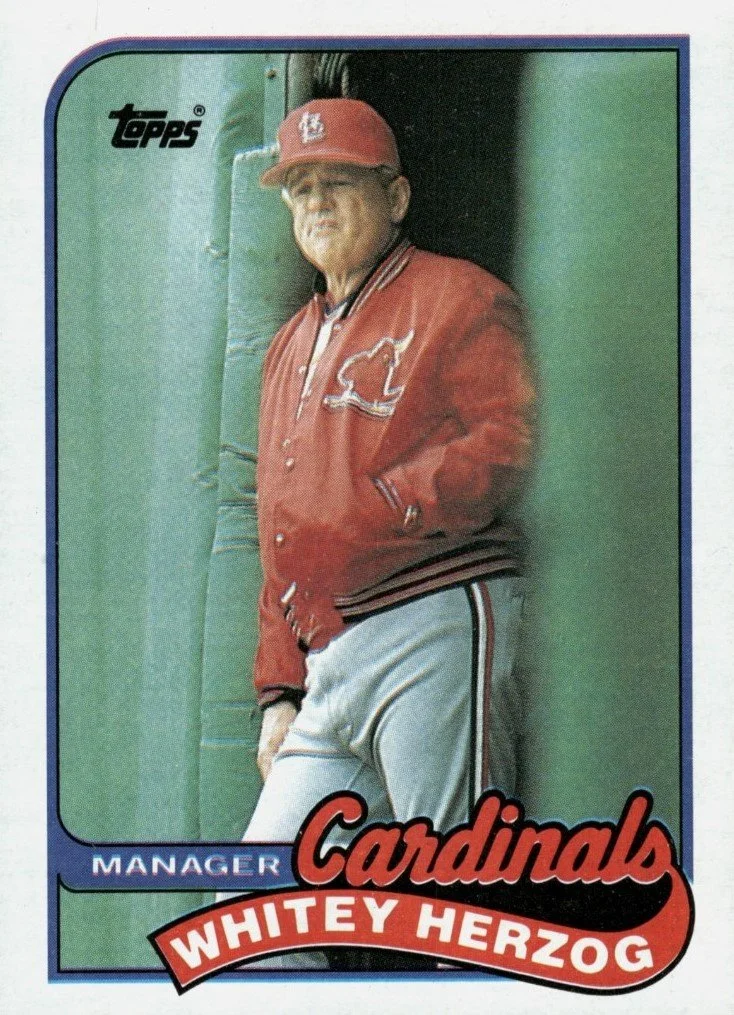
Whitey Herzog
1989 Topps
In the first inning, phenom (or pheenom as Jim Bouton winningly spells it in “Ball Four”) JJ Wetherholt singled and stole second. Ivan Herrera lined out to right and Wetherholt advanced to third; a sacrifice for Herrera. Alec Burleson singled to centerfield and Wetherholt trotted home. Burleson – whose Dickensian name is an apt description of the burly first baseman – stole second. So, when Nolan Gorman singled to right, Burleson scored.
The Cardinals led 2-0 after the first inning with only singles, efficient baserunning, and putting the ball in play to the outfield.
McGreevy kept dealing. Ricky Horton and John Rooney danced around what was happening right in front of them.
“My old partner in Chicago, Ed Farmer, a pitcher, used to say a starter would go through a moment of truth in a game two or three times. That is the first one in this game for McGreevy,” Rooney said at the conclusion of the fourth when the Cardinals pitcher walked one and another Ray reached on an error.
In the sixth, Rooney said, “he’s allowed two baserunners on an error and a walk” before McGreevy walked another.
Horton knew what was coming. Baseball in 2026 was coming while Horton preserved the silly hokum of mid-20th century.
“I would say this is his last batter,” Horton said, and it proved true. McGreevy got Jake Fraley out on a liner to end the sixth inning. It took him 96 pitches.
Riley O’Brien came on in the seventh and immediately gave up a single to center by Junior Caminero. McGreevy could’ve done that and only thrown 97 pitches.
Of course there was more.
The Cardinals entered the ninth inning leading 4-0. They stumbled their way to a tie game. Thence, after failing to win it in the ninth, St. Louis proceeded to let the Rays ghost runner score from second and looked ready to squander McGreevy’s gem.
But they came back and Wetherholt followed up an Opening Day homer with a walk-off double to win the game.
Knock on wood, the success won’t jinx him.