
WHO ARE THESE GUYS?
Baseball teams once had an identity reflecting the manager.
That time is no longer.
Who are these guys now?
The Orioles were Earl Weaver.
The Cardinals were Whitey Herzog.
The Yankees were Billy Martin and his id-partner George Steinbrenner.
The Dodgers were Tommy Lasorda.
So I ask you this. Are the Dodgers Dave Roberts?
It is an era when managers are explicitly limited in their role. They are, often, under strict instructions not to think or have an opinion. They sit in the dugout in order to carry out the specific directions of the front office.
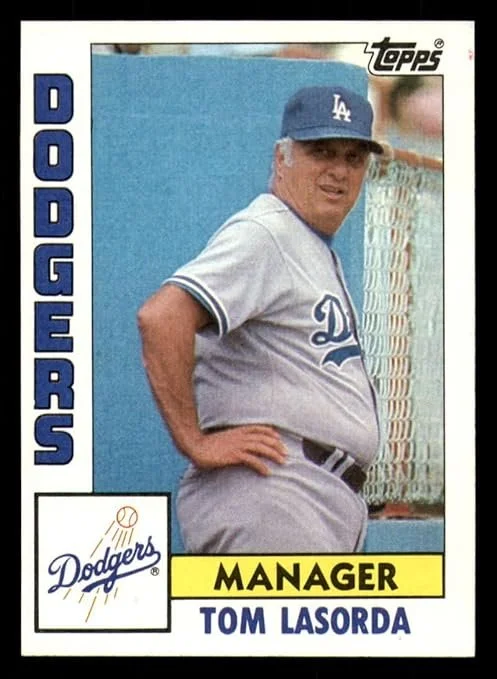
Tommy Lasorda
Baseball managers wear uniforms. They should not.
Big league managers are now media spokesmen and clubhouse psychologists. This is no small thing, but it’s a huge change from when titans strode the earth. It fundamentally changes the job of baseball announcers. The radio call no longer hangs on the discussion of what the manager may do. Managers do not make strategic decisions. These are dictated ahead of time and by a committee of suits upstairs. There are regression analyses that determine how a baseball team plays.
“With the count at 2-1, what will Whitey do here? Has he got the hit-and-run on? Gooden goes into his windup. Coleman is on the move with the pitch. McGee lines one to left and Coleman advances to third on the single. Worked to perfection!”
No one sacrifice bunts. No player has permission to steal on their own. These are sound policies, but they have moved the locus of power and personality away from the old fat guy wearing an ill-fitting polyester uniform to the players and shots of the deputy general manager for analytics, shown in a box far above the field.
With ABS, managers will no longer argue calls and strikes. There is replay, with a manager reduced to listening to a faceless video analyst telling him to make the silly headphones gesture if a call is worth challenging.
Red Schoendienst seemed like an omnipotent being to me when he was manager of the Cardinals. Oli Marmol seems to me like assistant to the regional manager. Baseball managers were called field generals or skippers in days gone by. No more.
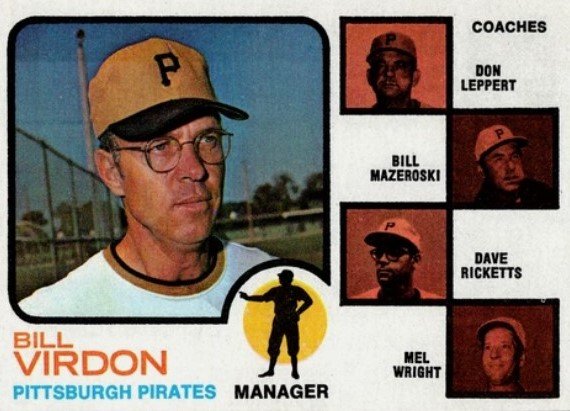
Bill Virdon
Pride of the West Plains High Zizzers
I am not pining for the old days, I am reporting.
Bruce Bochy is no longer in the dugout. Terry Francona, Reds manager with previous very successful campaigns with the Red Sox and Guardians, is the lone remaining manager with an identity.
Something called Blake Butera is manager of the Washington Nationals. Derek Shelton is either manager of the Minnesota Twins or a deputy store manager at a Target in St. Paul. I am told Clayton McCullough, whoever that is, manages the Miami Marlins.
Tony Vitello has gained attention as the new Giants manager, but only because he is an anamoly coming straight to the majors from a gig as head coach of the University of Tennessee Volunteers where his team won a championship a few years ago. White Sox announcers Len Kasper and Darrin Jackson talked about what an outlier he was in a game at Camelback Ranch. Jackson, a 12-year big-league outfielder with seven different teams, noted how much resentment and despair Vitello’s selection must have caused to long-serving minor league managers in the Giants system. Kasper noted Vitello’s former Mizzou teammate has been hired as bench coach, a move noted with favor because of Jayce Tingler’s two-year tenure as manager of the Padres.
Jake Eisenberg on the Royals broadcast from Scottsdale spent a lot of time talking about Vitello during Kansas City’s spring game against the Giants. He noted how much of a change it must be from last year’s manager Bob Melvin to Vitello in the San Francisco dugout. Melvin had 21 years as a manager of the Mariners, Diamondbacks, Padres, A’s and Giants. He’s as old school as you could get without being Sparky Anderson.
It’s a different game. They don’t even make baseball cards of managers. Who’d want a Warren Schaeffer* card, anyway?
*Mr. Schaeffer is the first-year manager of the Colorado Rockies. I feel certain I could manage the Rockies to a 50-win season, a 12 percent improvement over last year’s disastrous 119-loss year.